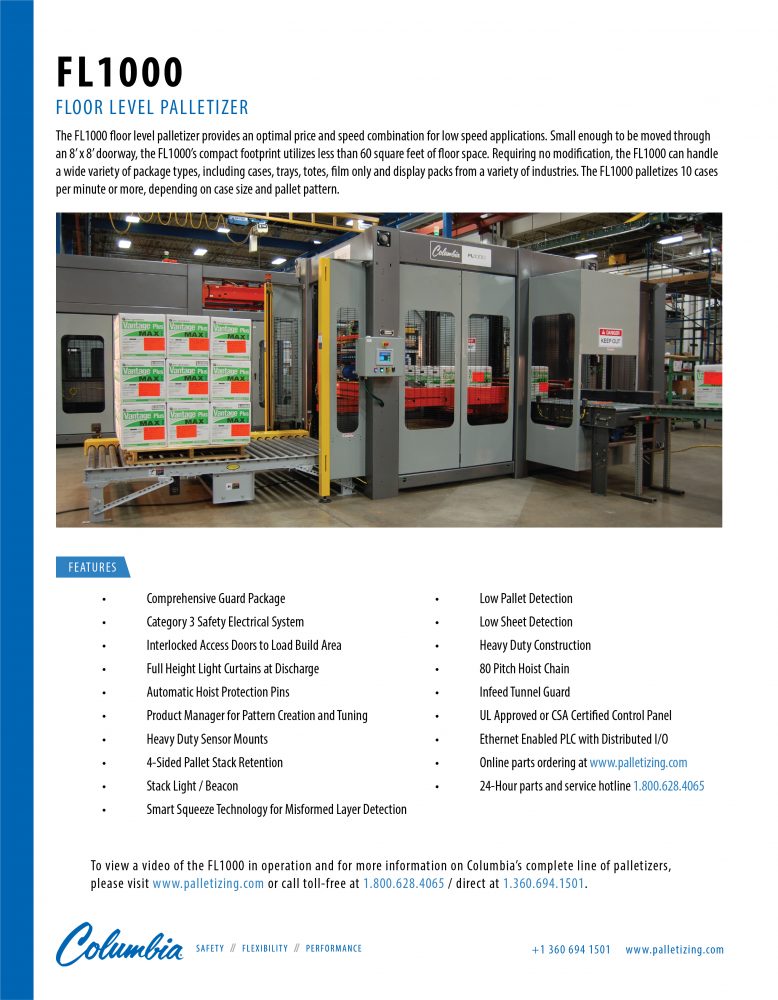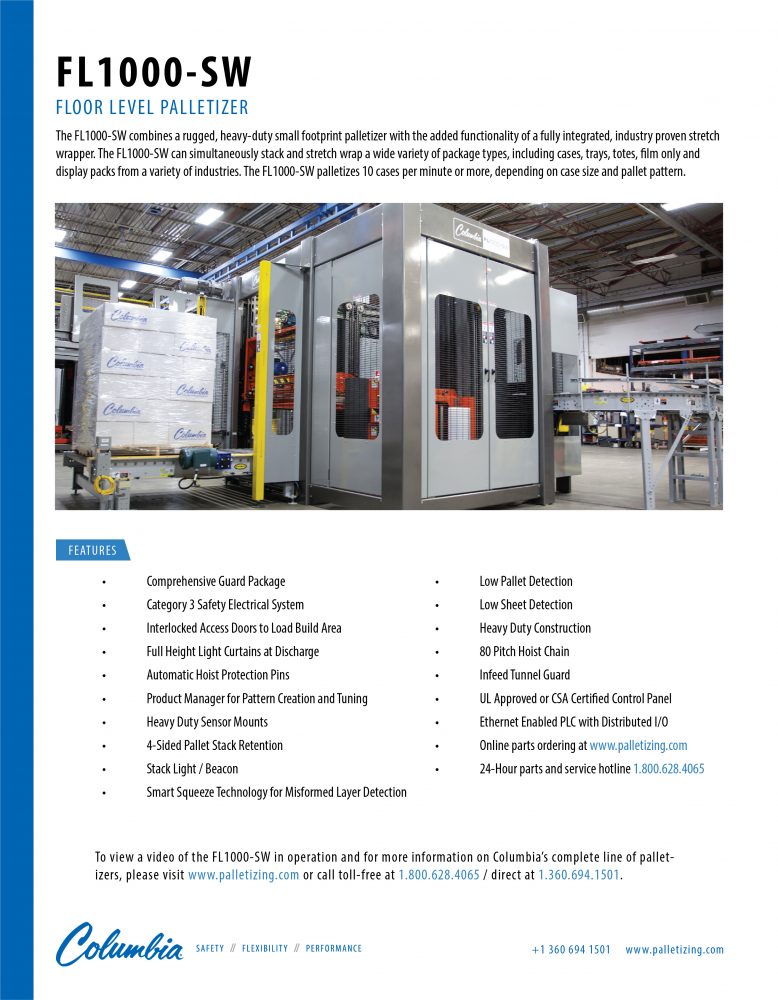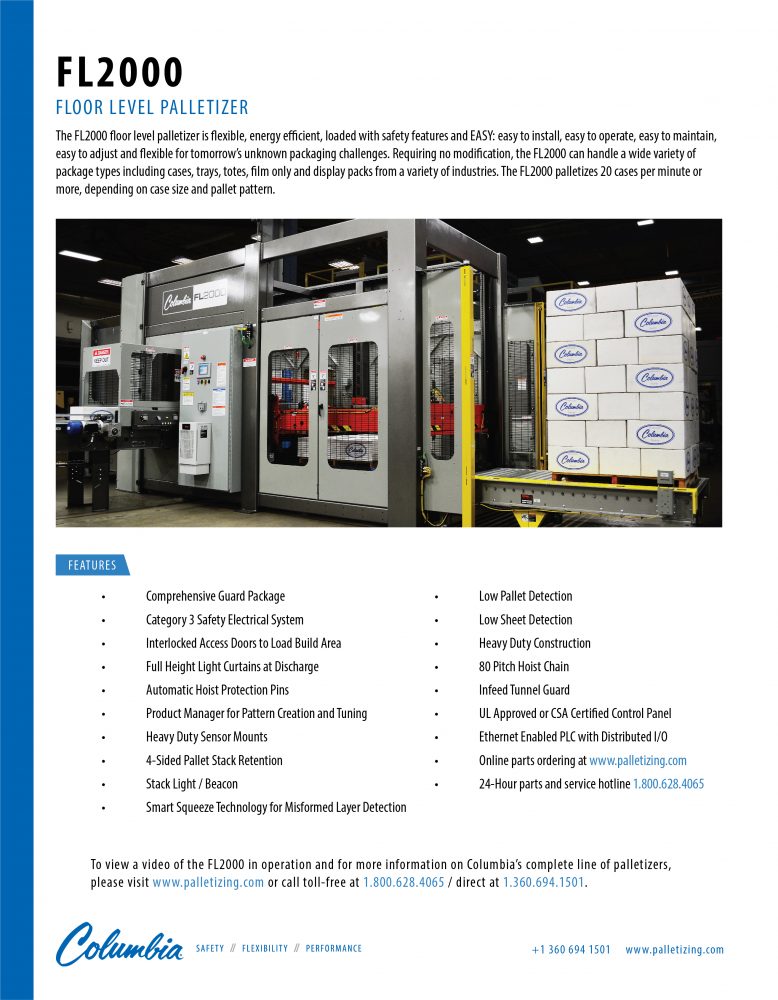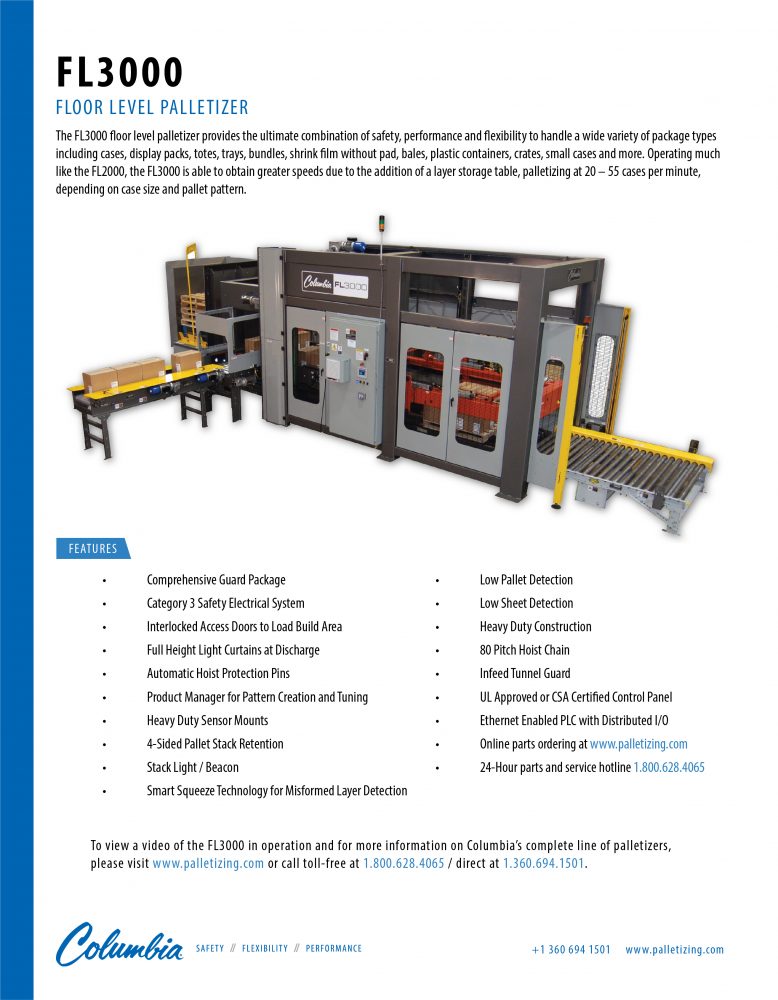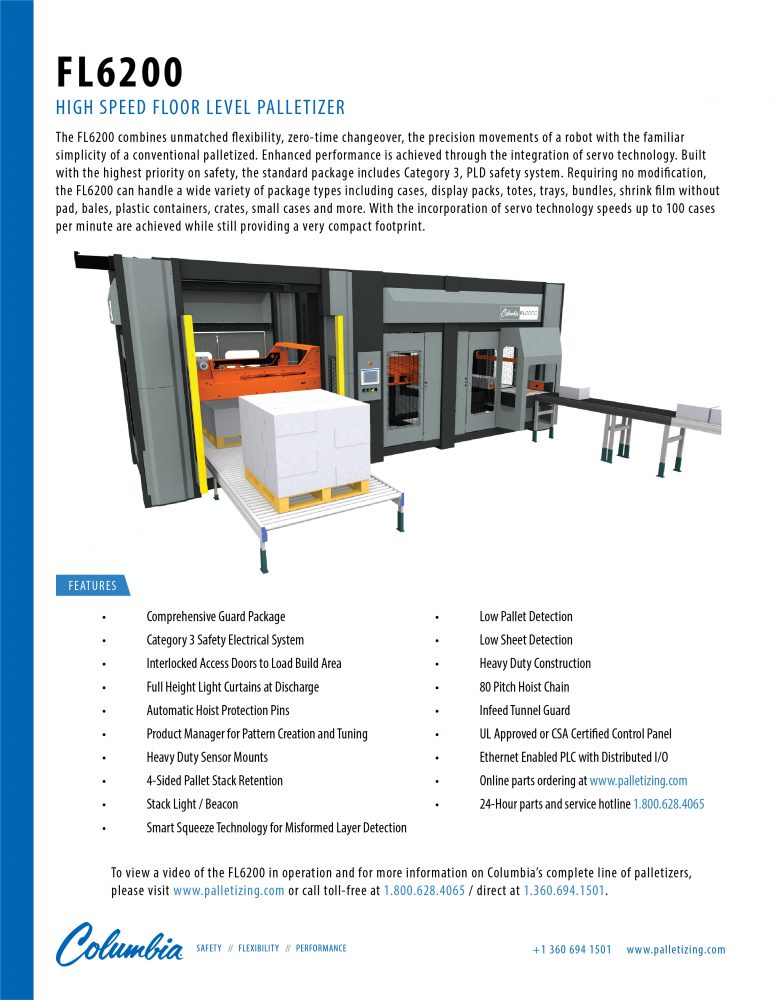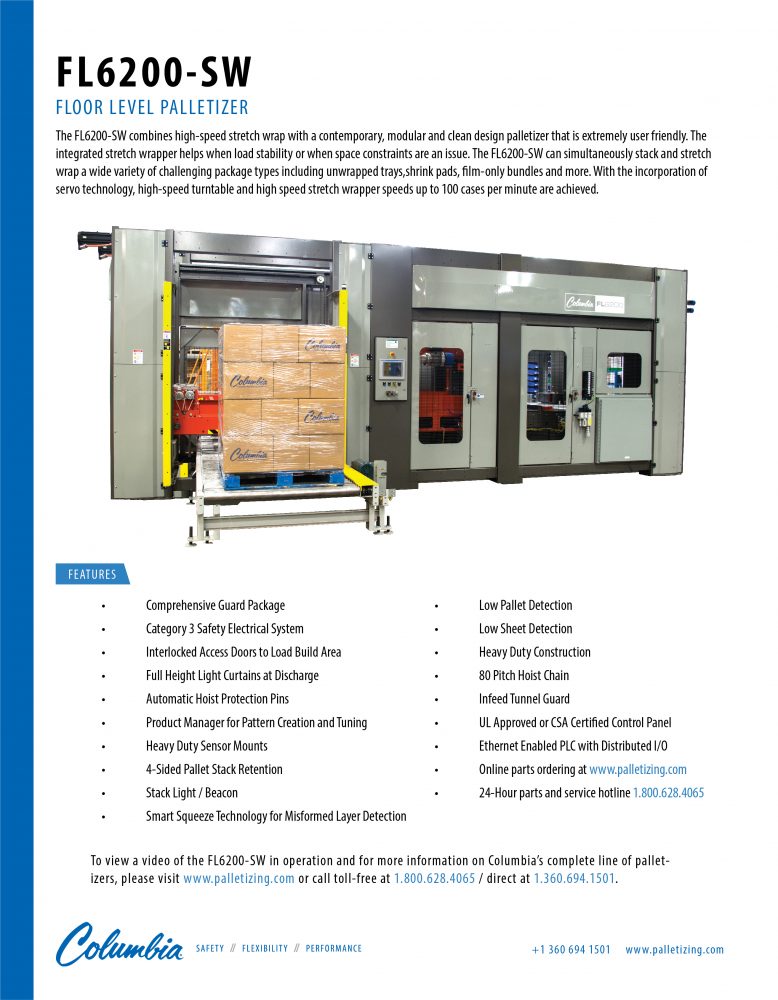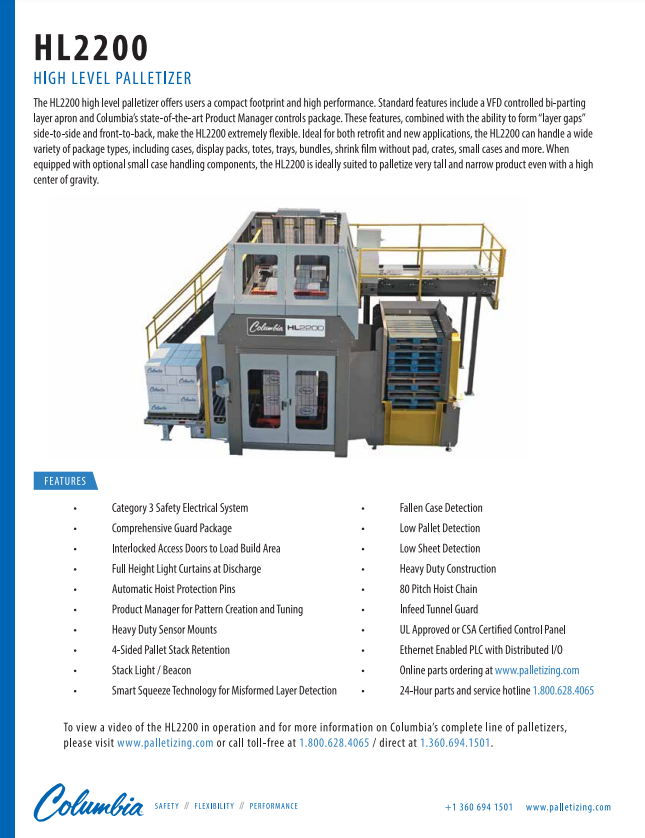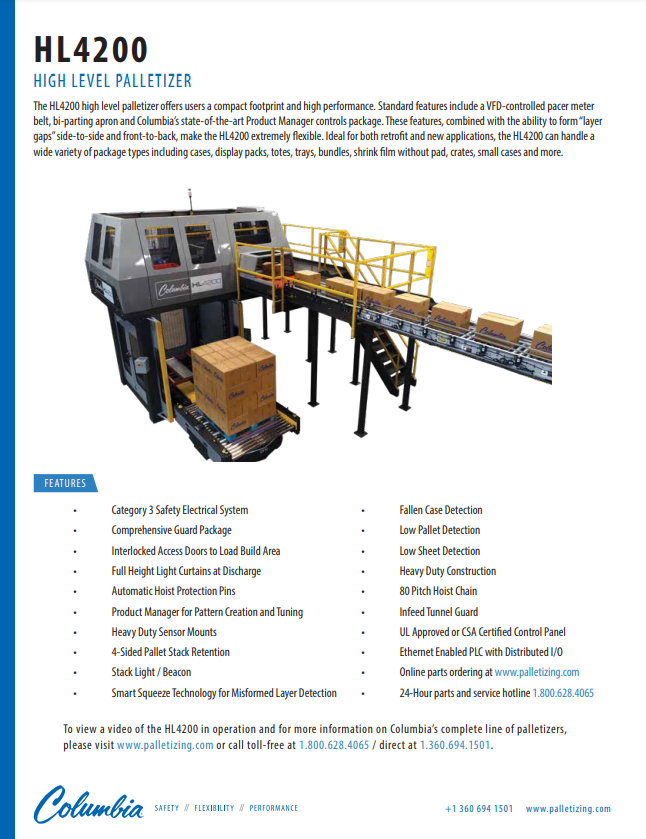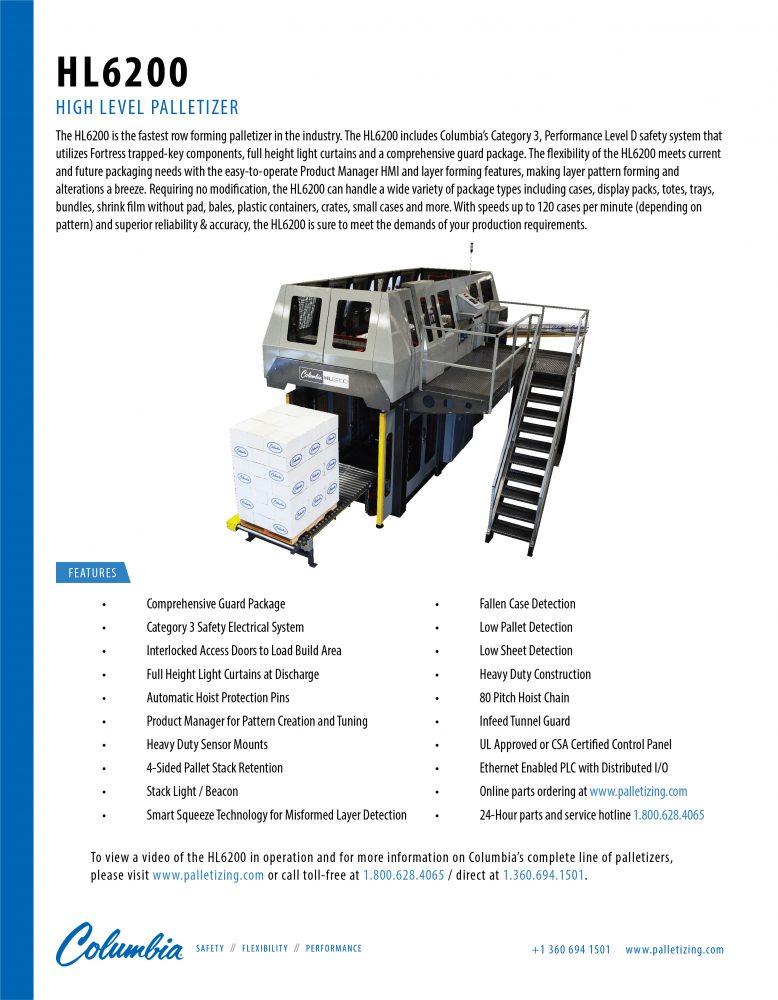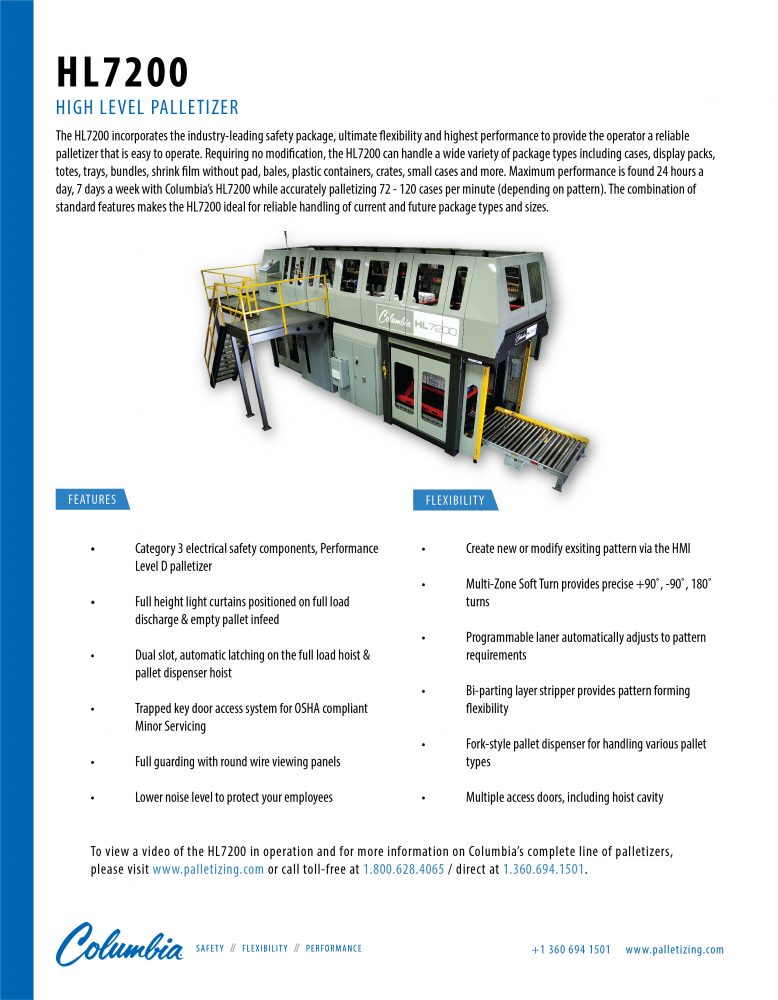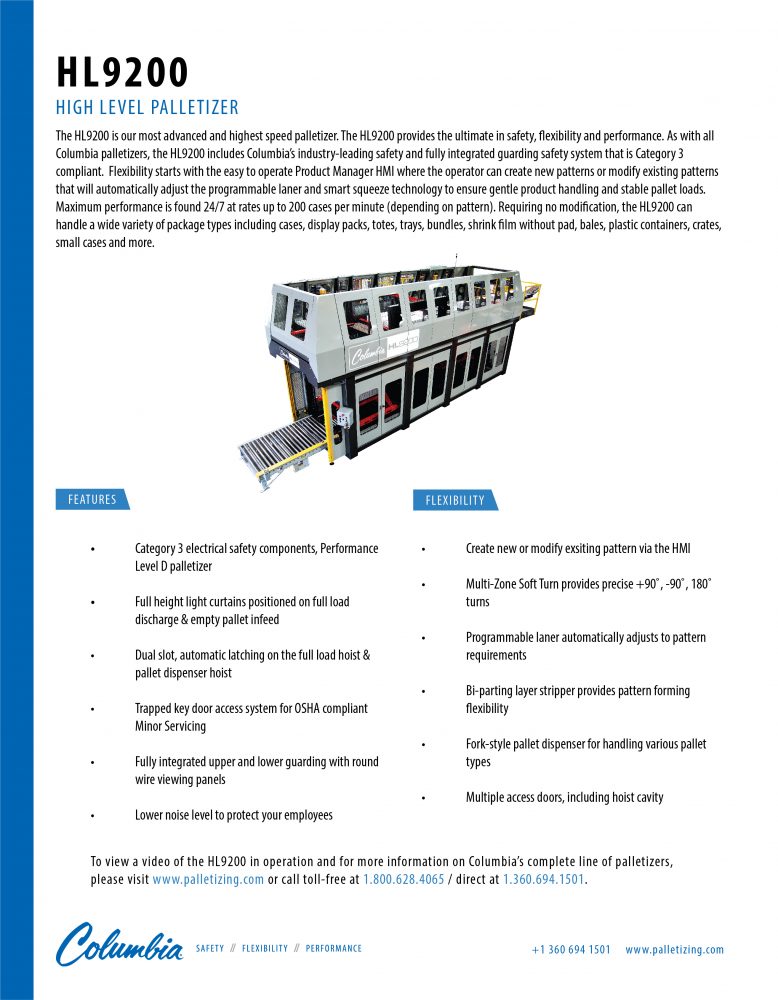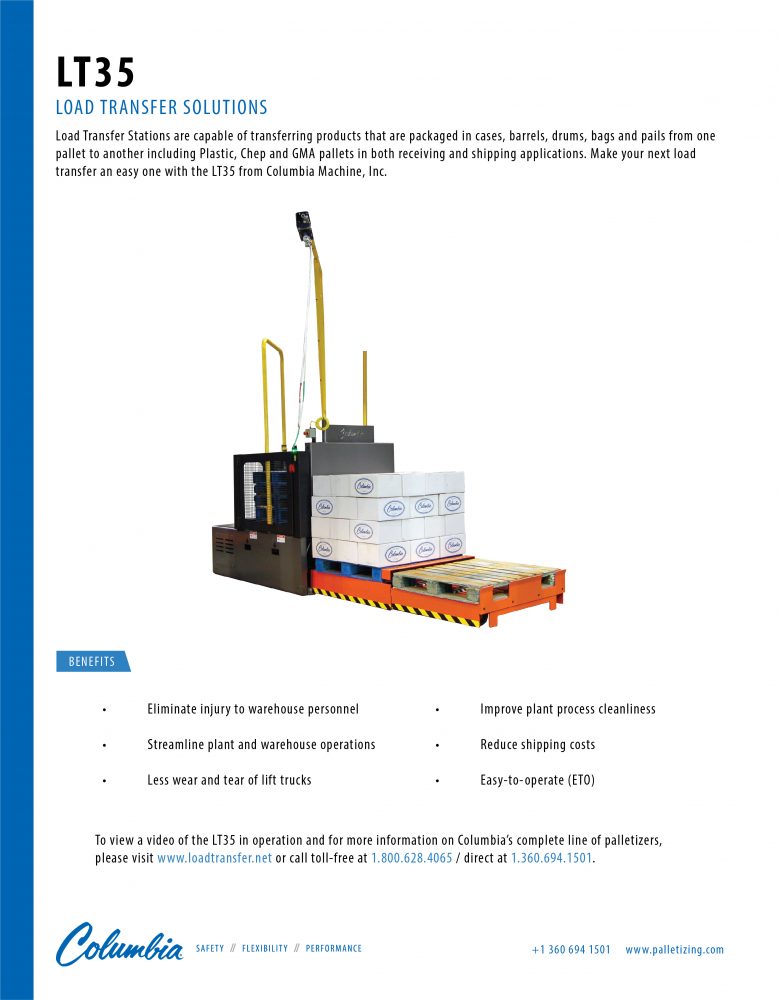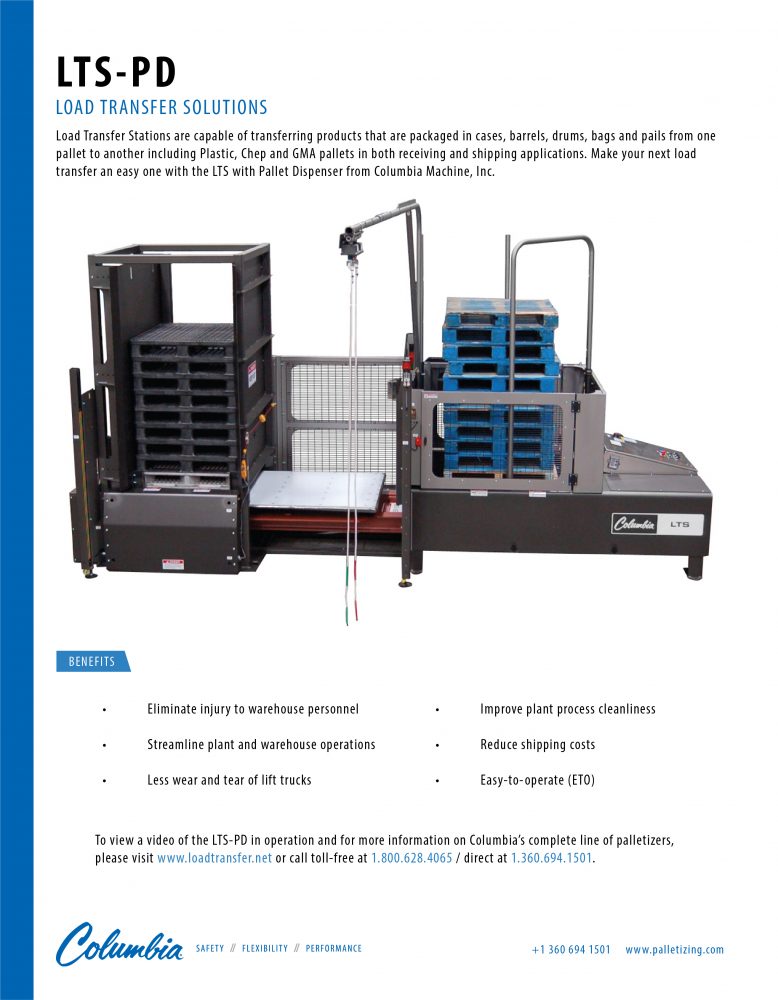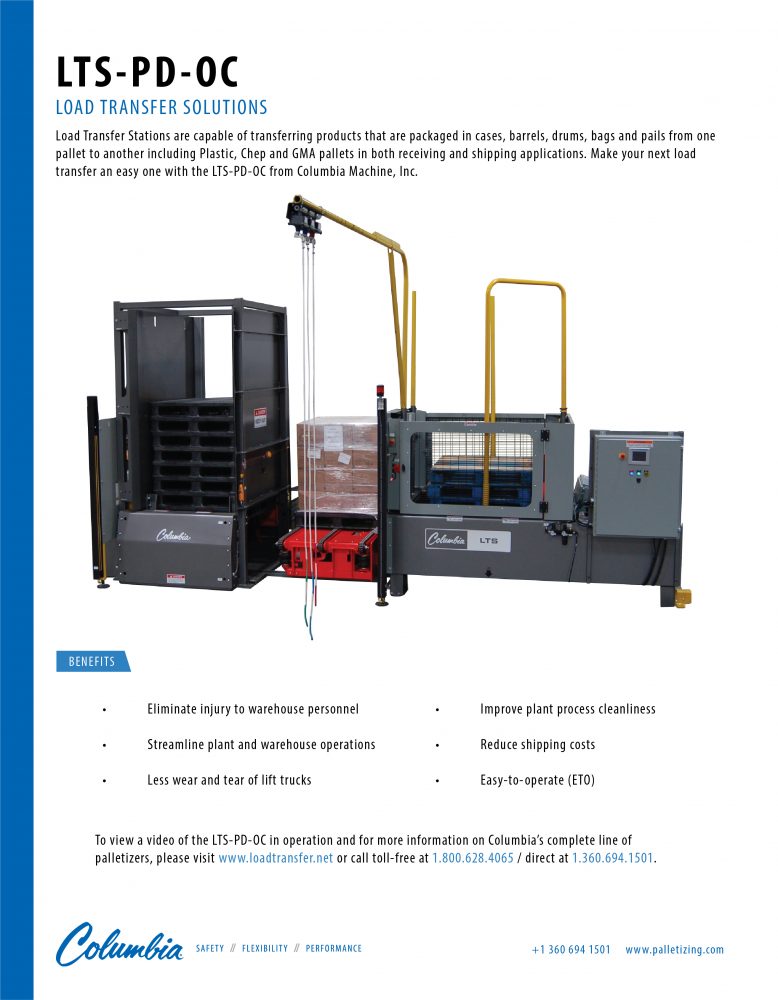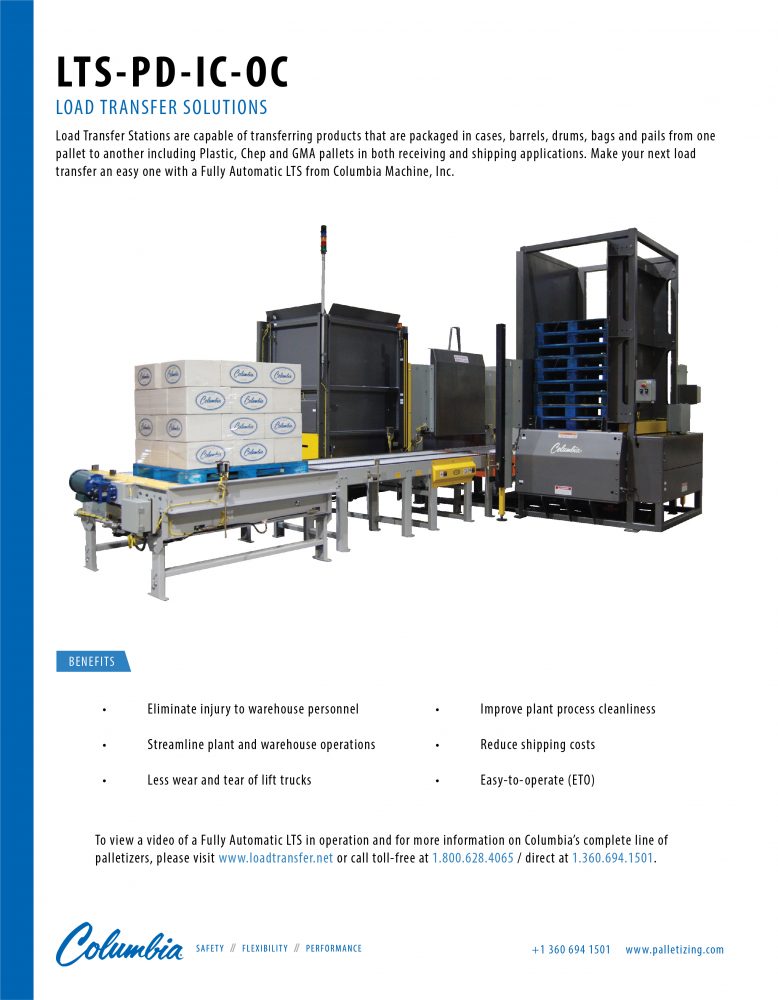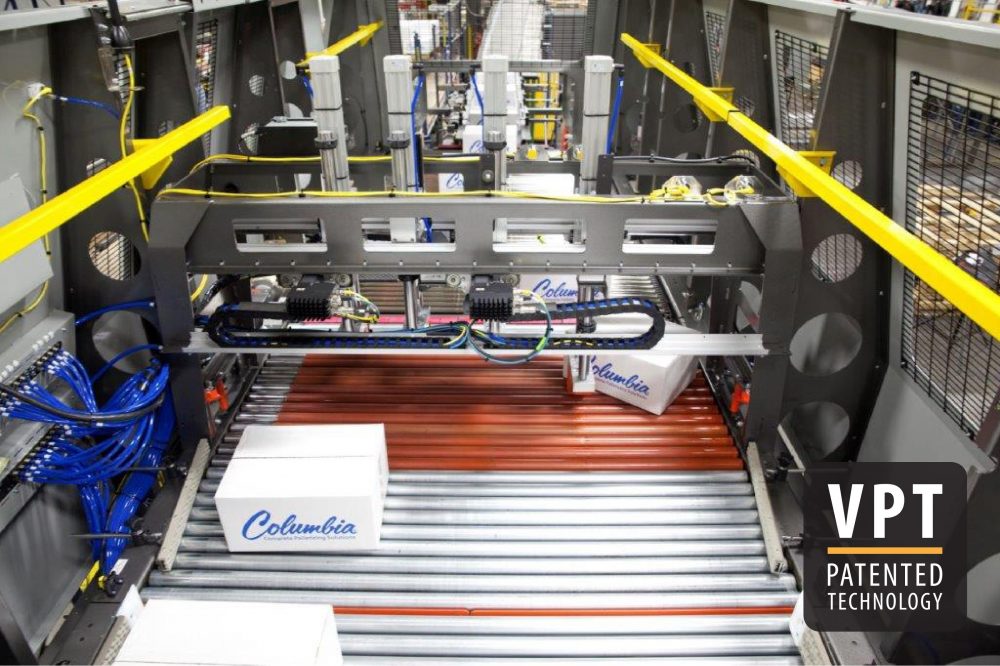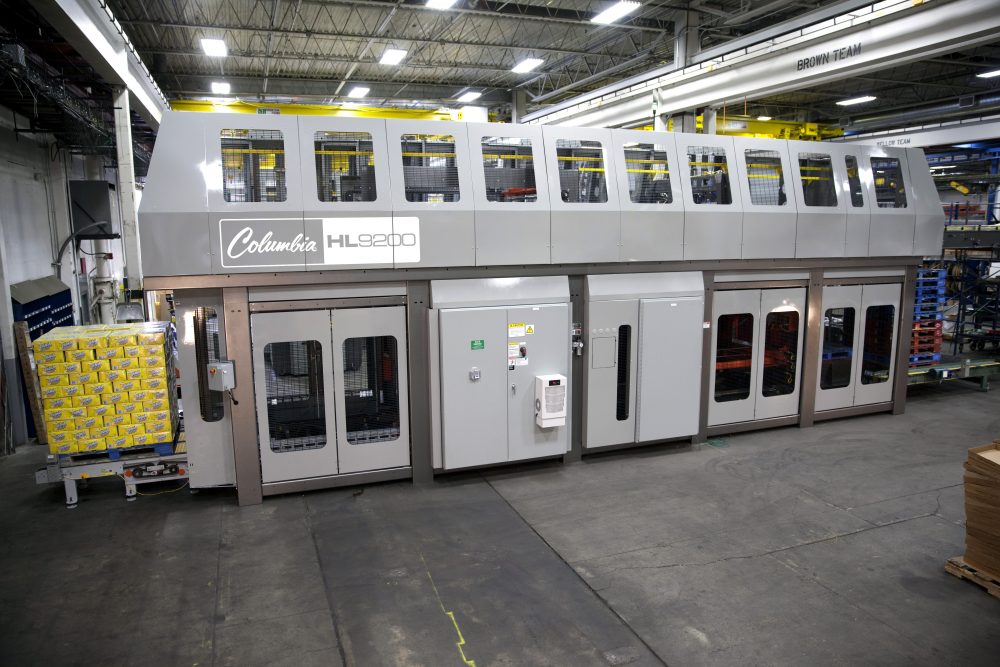
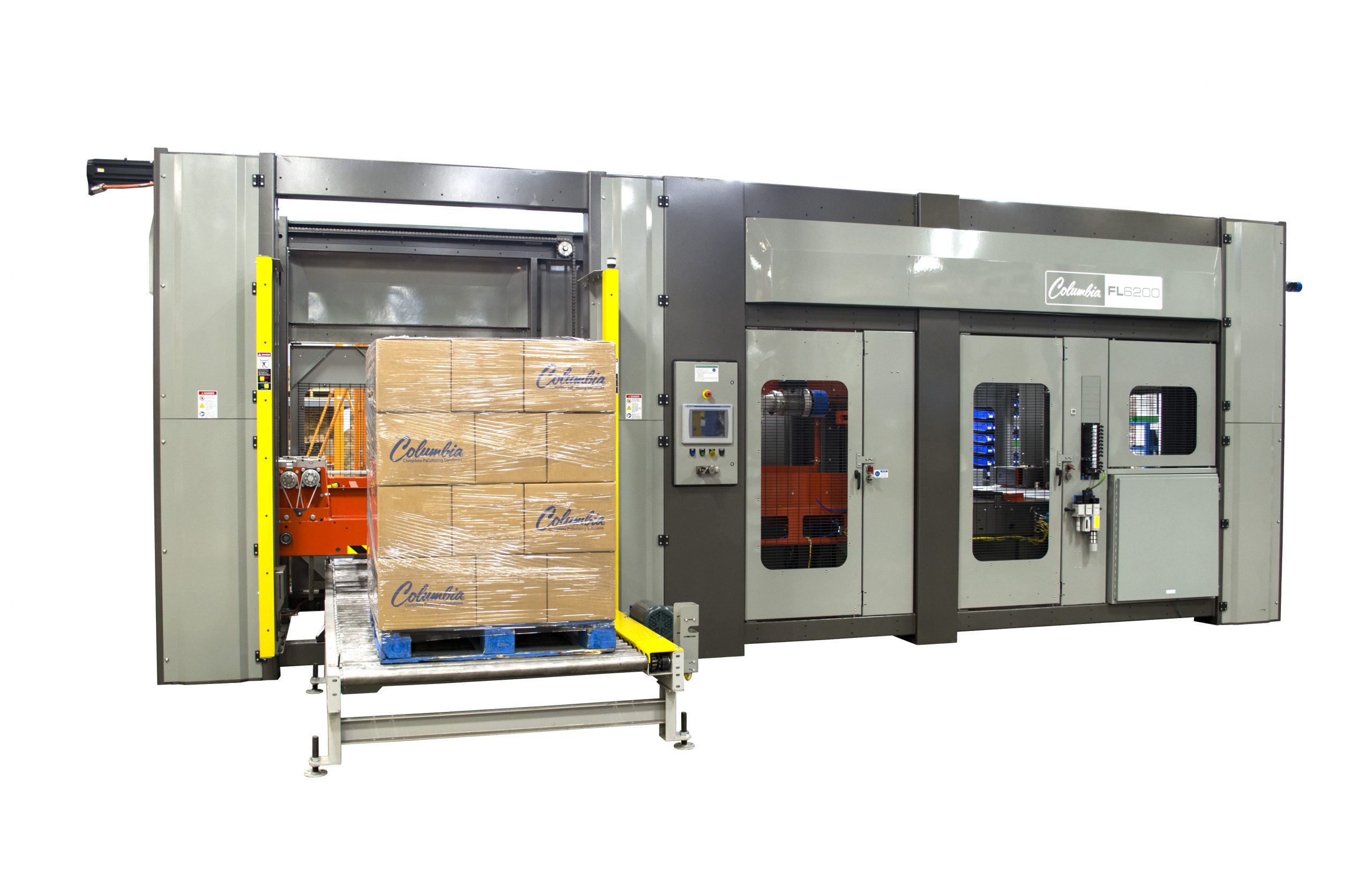
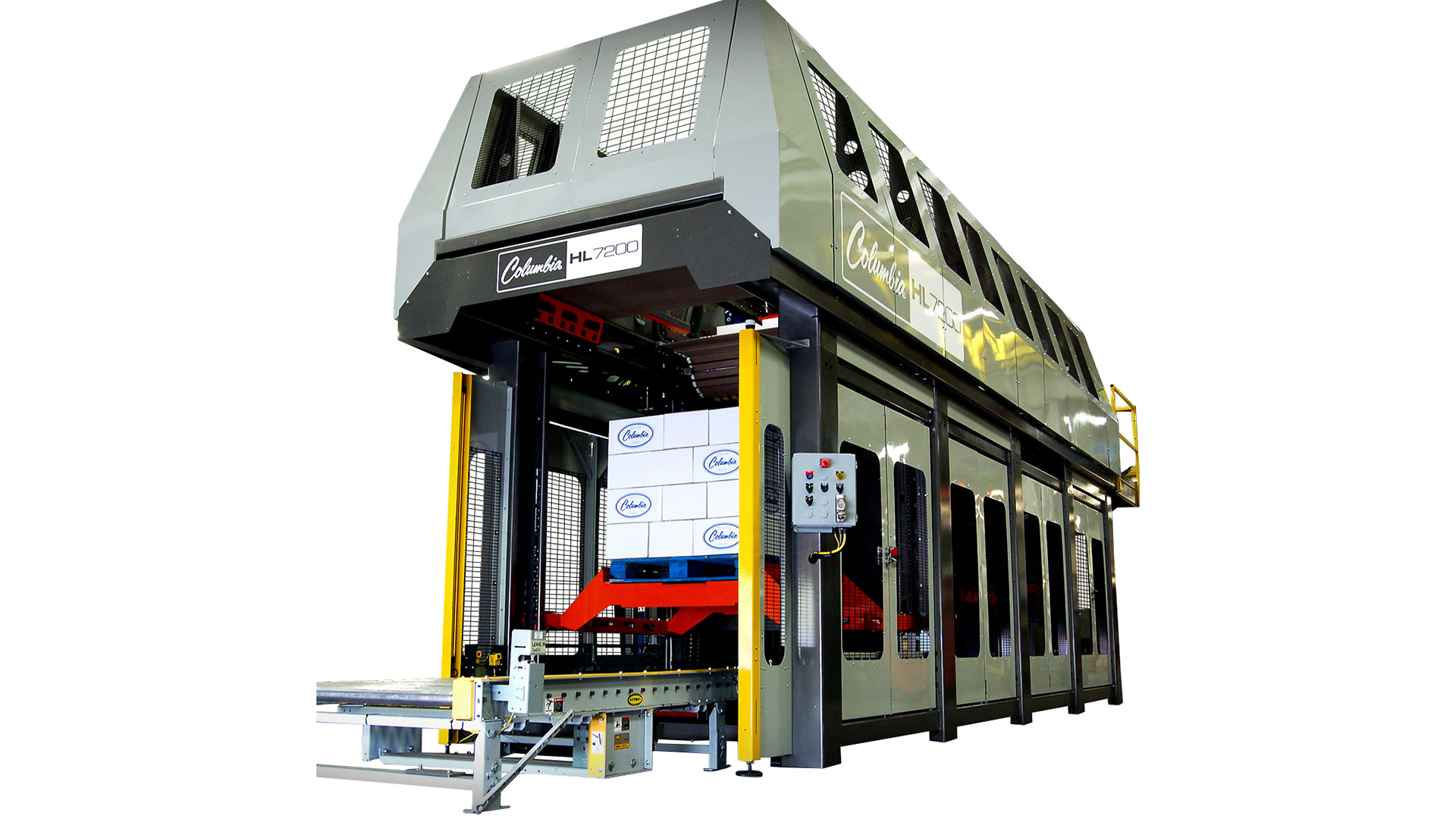
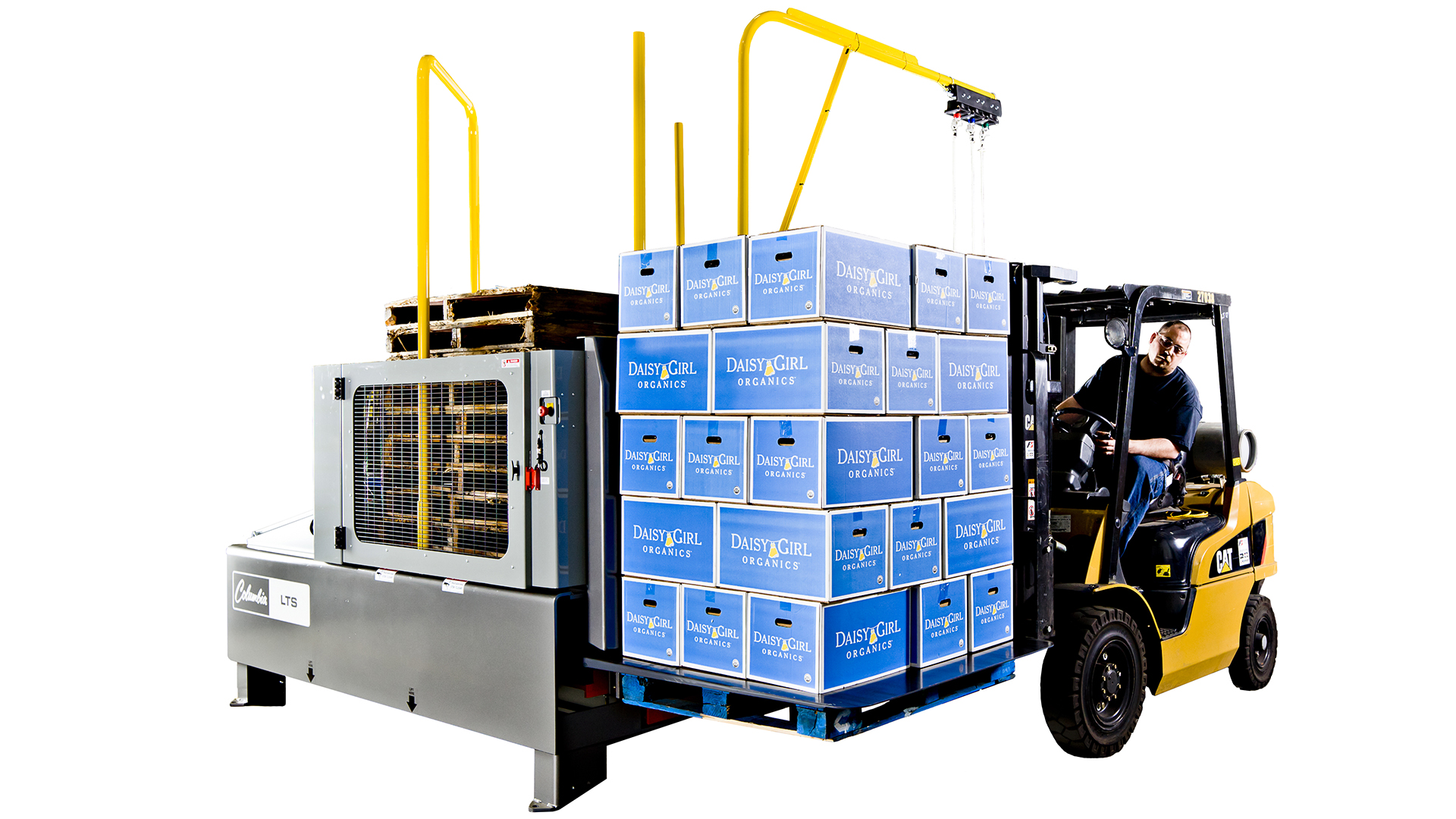
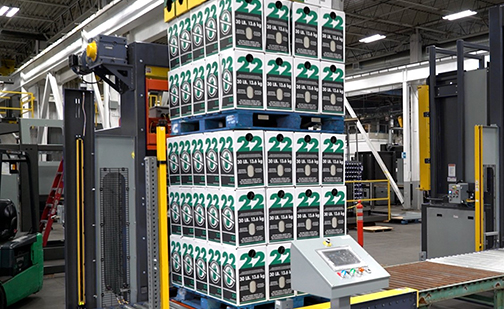
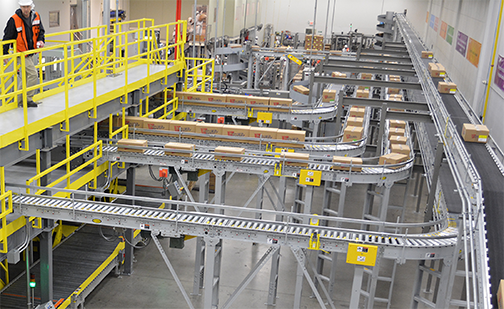
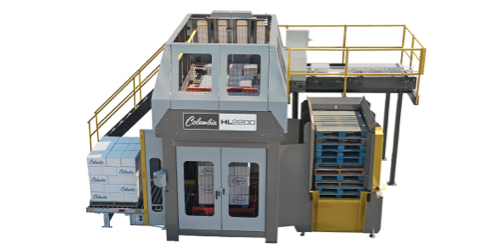
Palletizing equipment has been undergoing major changes in the past decade to keep up with different demands from different parts of the supply chain. “New Human Machine Interface (HMI) controls are transforming both conventional and robotic palletizers,” says Yeigh. “These controls permit the machines to be quickly reconfigured to handle different case sizes, pallet patterns and layers of product on the same machine.”
The computerized controls also provide improved data gathering and reporting. Real time reporting of production, alarm reports and downtime reports are some of the common capabilities customers need to refine their operations, along with other pieces of information important to the supply chain, like hourly output. Many of the new machines also contain complete schematics and operation manuals making them simpler and easier for people to troubleshoot and repair equipment without a call to the equipment supplier.
In many cases, the computer interfaces walk the operator or mechanic through troubleshooting or preventative maintenance. These interfaces are permitting palletizer makers to produce higher speed machines that can handle smaller case sizes.
“Many of the big box stores are moving to smaller cases and in some instances from traditional cases to shrink-wrapped product bundles increasing the capability and handling demands required on the machines,” says Yeigh. Both manufacturers and retailers are attempting to reduce waste and packaging, to deliver the largest amount of product to the consumer with the least amount of packaging.
HMIs are also making palletizers extremely versatile. “One robotic cell can handle four or five manufacturing lines because they can be adapted to multiple product variations, and because they typically handle only one or two units per movement,” says Harry Horni of Priority One, Bel Air, Md. “This gives them maximum flexibility in building different pallet patterns at the same time.”
Robotic palletizers, particularly gantry type palletizers, are moving into many distribution centers. These robots can handle a large number of lines and SKUs. “. . . (a gantry) can handle a large number of lines, sometimes 15 or more, and can produce the layered ‘rainbow pallet’ that makes distribution more efficient. A rainbow pallet is one where different layers may contain different products,” Horni says. “These systems can completely automate case picking operations for products like soft drinks, where different flavors in different quantities are needed at different stores.”
Ergonomics are a big advantage palletizers are bringing to smaller manufacturers. “A palletizer, either a conventional low level or robot, will minimize ergonomic issues associated with repetitive motion, lifting and rotation by employees doing hand palletizing,” says Dave Mathews, sales channel and new product development manager, Brenton Engineering Company, Alexandria, Minn. Small manufacturers are becoming aware of these advantages and in many cases are installing machines in operations that were not considered for a palletizer based on ergonomic improvements for employees alone.
Palletizers still have much room for improvement. The ability to organize at the case or unit level has started but still requires more refinement. Today’s supply chain, with its speed and intricacy, is a very new animal. The challenge facing palletizers is taking an old idea and keeping it new and useful to the new ways of handling and distributing product.